Concept 25 Some viruses store genetic information in RNA.

 David Baltimore, Howard Temin and Renato Dulbecco shared the 1975 Nobel Prize in Physiology or Medicine for the discoveries concerning the interaction between tumor viruses and the genetic material of the cell.
David Baltimore (1938-2025)
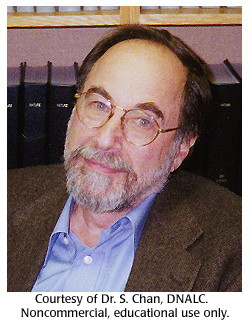
David Baltimore was born in New York City. As a high school student, he participated in the Jackson Memorial Laboratory research program in Bar Harbor, Maine. It was his first experience working in a biology research lab and interacting with scientists, and it was the start of his research career.
Baltimore studied biology and chemistry at Swarthmore College. In 1959, the summer of his third year at Swarthmore, Baltimore became one of the first undergraduate research students at Cold Spring Harbor Laboratory. He worked with George Streisinger who introduced him to the "new" field of molecular biology.
After graduating in 1960, Baltimore went to the Massachusetts Institute of Technology to do a Ph.D. in biophysics. He became interested in animal viruses and in 1961 left MIT and went to Rockefeller University to continue graduate work with Richard Franklin. Franklin taught a course on animal viruses that Baltimore had taken in Cold Spring Harbor. Franklin had experimental evidence that showed how certain viruses seem to shut down synthesis of cellular RNA and induce synthesis of viral RNA.
As a post-doctorate, Baltimore continued to study viral systems, specifically viral RNA synthesis. In 1965, Baltimore became a research associate at the Salk Institute where he worked on poliovirus. He found that the RNA genome of poliovirus became the mRNA message once it entered the cytoplasm.
In 1968, Baltimore accepted a position as an associate professor of microbiology at MIT. By this time, he began to suspect that not all RNA viruses replicated in the same manner. Baltimore knew about Howard Temin's DNA provirus hypothesis that viral RNA was a template to make viral DNA, which then became the template for the synthesis of progeny viral RNA. In the '60s, this was a radical idea and a clear departure from the accepted Central Dogma of DNA to RNA to protein. Given his own suspicions, Baltimore thought Temin's theory was logical and was able to prove it by finding the RNA-dependent DNA polymerase, later named reverse transcriptase in RSV and in a mouse tumor virus. Baltimore, Temin and Renato Dulbecco shared the 1975 Nobel Prize in Physiology or Medicine for their discoveries concerning the interaction between tumor viruses and the genetic material of the cell.
Baltimore became full professor of biology at MIT in 1972. From 1982-1990, Baltimore was a director, and one of the founders of MIT's Whitehead Institute for Biomedical Research. In 1990, he moved to New York to become president at one of his alma maters, Rockefeller University. After a year as president he stayed at Rockefeller as a professor for three more years. Baltimore was president of the California Institute of Technology (Caltech) from 1998 to 2006 and President of the American Association for Advancement of Science in 2007. Baltimore is still a biology professor at Caltech.


Like many scientists, David Baltimore and Howard Temin started their science careers early. They both participated in high school programs that allowed them to work in a research laboratory for the summer.

Reverse transcriptase is a very useful enzyme for molecular biologists. Can you think of ways reverse transcriptase can be used to clone genes?
 DNA and proteins are key molecules of the cell nucleus.
 One gene makes one protein.
 A gene is made of DNA.
 Bacteria and viruses have DNA too.
 The DNA molecule is shaped like a twisted ladder.
 A half DNA ladder is a template for copying the whole.
 RNA is an intermediary between DNA and protein.
 DNA words are three letters long.
 A gene is a discrete sequence of DNA nucleotides.
 The RNA message is sometimes edited.
 Some viruses store genetic information in RNA.
 RNA was the first genetic molecule.
 Mutations are changes in genetic information.
 Some types of mutations are automatically repaired.